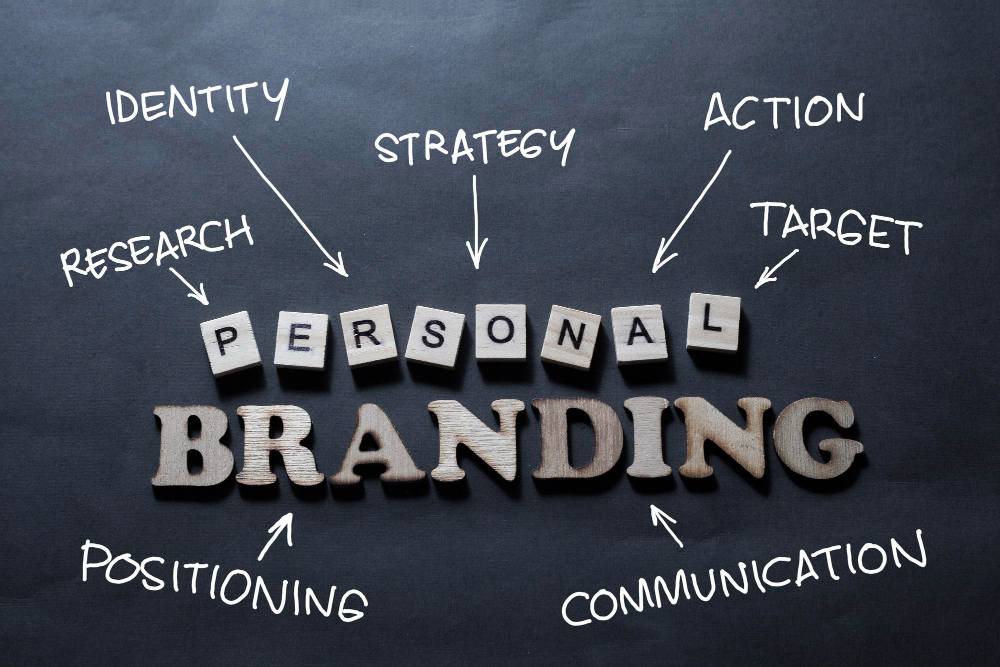
Building a personal brand as an independent professional is simpler than most people think, and more powerful than most people expect.
When you work inside a recognised company, the brand often enters the room before you do.
If your email address ends in Salesforce, Oracle, Cisco, HubSpot, Microsoft, Expedia or another established organisation, a degree of trust is created before you have said very much at all. The logo provides context. It signals credibility. It reassures people that you belong inside a serious professional environment.
For much of your career, that may have been helpful. Large organisations give experienced professionals the chance to lead complex work, manage teams, influence stakeholders and operate at scale. The brand does some of the heavy lifting, but the expertise you build while working inside it is still yours.
The challenge comes when you begin exploring fractional, advisory or independent work. The company infrastructure no longer explains you. Your job title no longer carries the same meaning outside the organisation. The market needs a new way to understand who you are, what you do and why your experience matters.
That is where personal brand becomes important.
Not personal brand in the performative sense. Not motivational posts, daily selfies or endless content for the sake of visibility. For experienced professionals, personal brand is much simpler and more useful than that. It is the system that helps the right people understand your value before they speak to you.
Your LinkedIn profile, your website, your professional story, your point of view and the way you are introduced all become part of that system. Together, they form your new professional shop window.
The LinkedIn CV Trap
The most common mistake experienced professionals make when exploring fractional work is treating LinkedIn like a CV.
This is understandable. For years, LinkedIn has been used by recruiters, talent teams and hiring managers to assess career history. Most profiles are written as a timeline of previous roles, responsibilities and promotions. They describe what someone managed, where they worked and how long they stayed.
That works reasonably well when the goal is another full-time role.
It works less well when the goal is fractional, advisory or consulting work.
A CV looks backwards. It asks the reader to interpret your past and work out how it might apply to their current problem. A good fractional profile looks forwards. It helps a potential client understand the problem you solve, the type of organisation you help and the value you can create.
This distinction matters.
A founder, CEO or investor does not want to decode your career history. They want to know whether you understand the challenge in front of them. They are not asking, “What did this person used to do?” They are asking, “Could this person help us now?”
Your LinkedIn profile should answer that question quickly.
That does not mean deleting your career history or pretending your previous roles do not matter. They matter enormously. But they need to be framed as evidence of your expertise rather than as the main message.
A strong profile usually needs three immediate changes:
- A headline that explains who you help and what problem you solve.
- An About section written in a clear, human voice.
- A professional visual presence, including a strong headshot and relevant banner.
A headline such as “Former VP of Marketing at Adobe” may be impressive, but it points backwards. A headline such as “Helping Series B SaaS companies build scalable go-to-market functions” points towards a commercial outcome.
That is the shift.
From history to value.
Your About section should tell the commercial story
The About section is often the most underused part of a senior professional’s LinkedIn profile.
Too often, it reads like a formal biography written for an internal promotion document. It lists responsibilities, regions, teams, budgets and stakeholders. It may be accurate, but it rarely creates a strong commercial signal.
For fractional work, the About section needs to do something different.
It should tell the story of your expertise in a way that makes sense to the market. That means writing in the first person, using clear language and connecting your experience to the problems your target clients are likely to face.
The best About sections usually answer four questions:
- What type of work have you spent your career doing?
- What problems have you repeatedly solved?
- Who are you best placed to help now?
- What kind of outcomes can you support?
This does not need to sound over-polished or self-important. In fact, it is usually better when it sounds grounded and direct. The goal is not to impress everyone. The goal is to make the right person think, “This sounds relevant to us.”
For experienced professionals, credibility rarely comes from hype. It comes from specificity.
A generic profile says, “I am a strategic commercial leader with a track record of delivering transformation.”
A stronger profile says, “I help B2B technology businesses improve revenue performance by fixing the gap between marketing, sales and customer success.”
The second version gives people something to remember, repeat and refer.
Signalling is not broadcasting
One of the reasons many experienced professionals hesitate to become more visible is that they associate personal branding with online noise.
They see people posting constantly and assume that building a brand means becoming a content creator. For most fractional professionals, that is neither necessary nor desirable.
The better concept is professional signalling.
Signalling is about showing evidence of how you think. It is a way of giving your network small, regular reminders of your expertise without announcing that you are looking for work.
Broadcasting says, “I am available.”
Signalling says, “Here is how I think about a problem you may recognise.”
That difference is important.
A post announcing that you are open to opportunities may generate kind comments from former colleagues, but it often positions you as a job seeker. A thoughtful post explaining why mid-sized companies struggle to scale sales after Series B funding creates a different impression. It shows expertise. It helps the right people understand where you fit.
Most senior decision-makers do not engage publicly with this type of content. They may not like it, comment on it or share it. But they see it. They remember it. And when a relevant problem appears, your name becomes easier to recall.
That is how authority often works at a senior level. Quietly. Gradually. Through repeated evidence of judgement.
You do not need to post every day. One useful post, article or thoughtful comment every few weeks can be enough, provided it is clear, relevant and connected to the work you want to be known for.
The three signals that build credibility
A useful personal brand system does not require endless content ideas. In most cases, three types of professional signal are enough.
The first is the Authority Signal. This is a specific insight grounded in your domain expertise. It is not generic advice or a recycled quote. It is the kind of observation that only someone with your experience would make.
For example, someone with deep commercial experience might write about the common mistakes companies make when trying to move from founder-led sales to a scalable sales model.
The second is the Perspective Signal. This is where you take a clear, thoughtful position on a common industry issue. It should not be inflammatory, but it should not be bland either. The aim is to show judgement.
For example, a people leader might explain why many scaling businesses hire senior talent too late, or why culture problems often begin as operating-model problems.
The third is the Proof Signal. This is evidence that your expertise is being applied in the real world. It might be a lesson from a recent project, a client outcome, a workshop insight or a reflection on a pattern you are seeing in the market. It does not need to reveal confidential information. It simply needs to show that you are active, credible and engaged.
Together, these signals create a body of evidence.
They show that you are not simply relying on your past title. You are actively thinking, contributing and helping organisations solve current problems.
Your website is the asset you own
LinkedIn is important, but it is still a rented platform.
The algorithm changes. Layouts change. Visibility changes. You do not control the environment.
Your website is different.
It is the one part of your digital presence that you own and can shape completely. For a fractional professional, it does not need to be large or complex. A simple, well-written website is often enough.
The purpose of the website is to do three things:
- Explain what you do.
- Establish credibility.
- Make it easy for the right person to contact you.
That is all.
Many professionals overcomplicate this. They try to make themselves look like a large consultancy, using vague service descriptions, stock images and corporate language. The result often feels less credible, not more.
A better approach is to build a specialist practice site. Clear positioning. A concise story. One or two focused offers. A short bio. A few proof points or client outcomes. A simple call to action.
The website does not need to win awards. It needs to create confidence.
If someone has been referred to you and visits your site after a conversation, they should leave with a stronger sense of who you are, what you do and why you are credible.
That is the job of the website.
Personal brand is really trust infrastructure
For experienced professionals, personal brand is not about fame.
It is trust infrastructure.
It helps people understand your expertise before they meet you. It makes referrals easier. It gives potential clients confidence that you are serious about your work. It reduces ambiguity.
This is particularly important in fractional careers because many opportunities begin informally. Someone mentions your name in a conversation. A former colleague introduces you. An investor suggests you might be helpful. A founder checks you out before deciding whether to book a call.
At that moment, your digital presence either supports the opportunity or weakens it.
A strong personal brand does not need to be loud. It simply needs to be coherent.
Your LinkedIn profile, website, professional language and visible insights should all tell the same story.
Who you help.
What problem you solve.
Why you are credible.
What the next step should be.
Managing the internal critic
There is one final barrier worth naming.
Many experienced professionals feel uncomfortable putting themselves forward. After years inside respected organisations, it can feel strange to express a point of view under your own name. The corporate brand provided cover. Without it, even a simple LinkedIn post can feel oddly exposed.
That reaction is normal.
But it is worth remembering that your expertise did not disappear when you stepped outside the company structure. The judgement you developed, the mistakes you learned from and the problems you solved are still yours.
The market is full of people with theories. It is shorter on people with real experience.
Sharing that experience is not showing off. It is helping others avoid mistakes you have already seen.
For many professionals, that is the healthiest way to think about personal brand. Not as self-promotion, but as useful signal. Not as performance, but as professional contribution. And for experienced professionals with decades of real insight to share, it is often the most natural thing in the world once they start.
The opportunity ahead
Fractional careers are built on trust.
Before someone hires you, refers you or invites you into a conversation, they need to understand where you fit. Your personal brand helps make that happen.
It does not need to be complicated. It does not need to be loud. It simply needs to be clear, consistent and credible.
If the company brand no longer arrives before you do, your own professional presence needs to carry more of the weight.
That is not something to fear.
It is an opportunity to be known for the expertise that was always yours.
Next in the series
The Simple Visibility Engine: Your Website and LinkedIn Profile
Ready to go deeper?
The PIVOT book covers the full Influence stage in more detail, including the 1:9:90 rule, the Referral Loop and how to build a pipeline from the people who matter most (visit the resources hub).
If you would like help building and positioning your own digital presence as part of a structured launch, our Explore Package is the right next step.